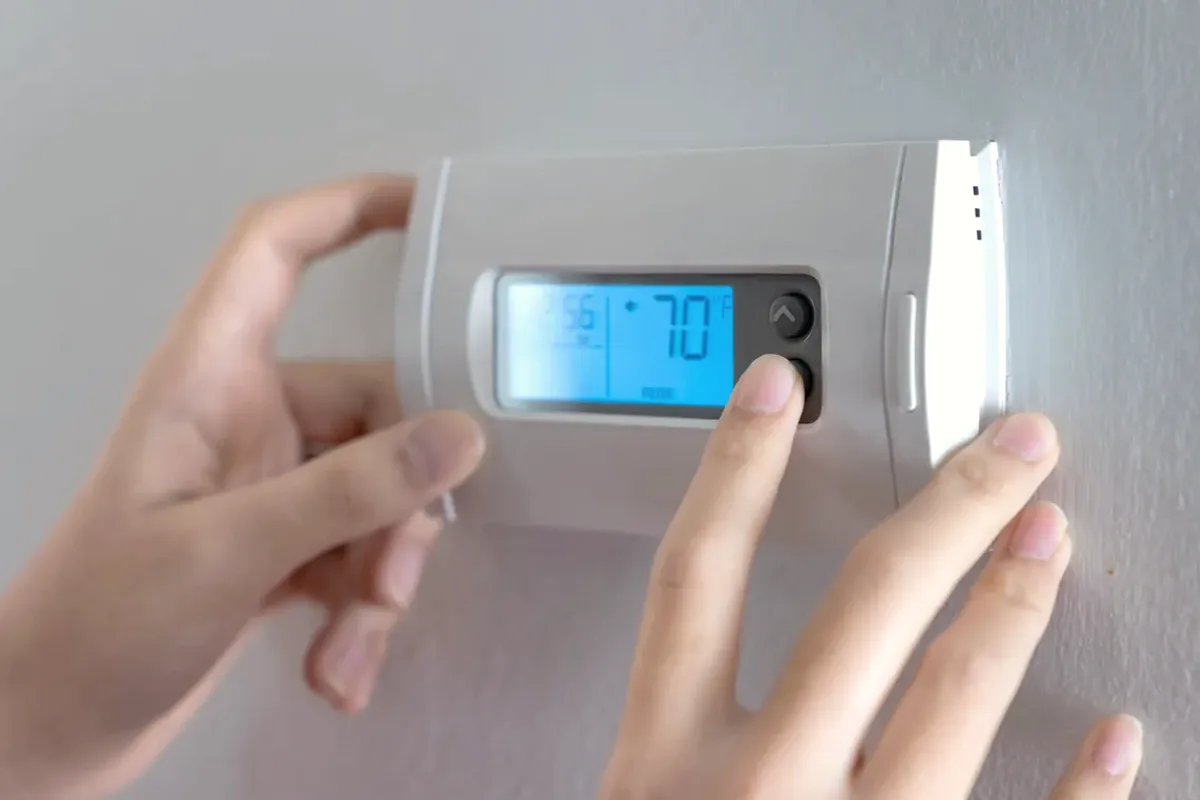
Request thermostat repair & replacement for a property in Kitchener. Include the equipment, the problem or planned work, and your location so the request can be reviewed.
What equipment is connected to the thermostat, and what happens when it calls for heating or cooling?
A thermostat that will not turn on, reads differently from the room, or causes irregular system operation may have a control fault or a problem elsewhere in the control circuit. Diagnosis can include thermostat voltage, transformer output, wiring connections, and whether the equipment receives the expected call. Replacement is not simply a matter of choosing a smart model: compatibility with the system's stages, zoning, and controls matters. Findings help distinguish repair from an appropriate upgrade.
Record the thermostat model, displayed temperature or message, and whether the heating or cooling equipment responds to a call. A service assessment can verify voltage, transformer output, wiring, and the control sequence without assuming the thermostat itself is the fault. For replacement, equipment stages, zoning, and required control features determine which thermostat types are compatible.
Thermostat voltage, transformer output, wiring, and call verification
Manual, programmable, smart, and zoning control compatibility
Repair versus replacement for equipment stages and control needs
Assessment and Scope
Questions for the Proposed Work
01
Trace the control call before replacing parts
A blank display, inaccurate reading, or short cycling can arise from batteries or a sensor, but can also reflect wiring, transformer, or equipment-control problems. Diagnosis should follow the call from thermostat through the relevant control circuit and verify the voltage at appropriate points. Internal electrical testing is not an occupant task. These checks matter because replacing a thermostat will not correct a fault that originates in the transformer, wiring, or connected equipment.
02
Match controls to equipment stages
Manual, programmable, smart, and zoning thermostats differ in features and control capability. The right replacement depends on the connected furnace, air conditioner, or heat pump, including how many stages or zones it must control. A thermostat that lacks the needed functions may not operate the system as intended. Confirm wiring and compatibility against equipment documentation before selecting a model, rather than assuming every modern thermostat works with every HVAC system.
03
Choose repair or upgrade by need
A repair may be appropriate when testing identifies a correctable battery, sensor, or connection issue and the existing control remains suitable. Replacement may make sense when the thermostat is faulty, incompatible, or cannot manage the functions of newer connected equipment. Runtime reporting and remote features are options, not proof of improved operation. Compare the actual control requirements and household preferences, then confirm the proposed device supports the system.
Compare the next step
Describe the desired control outcome to each bidder, including scheduling, remote access, sensors, and existing equipment. Ask which interfaces or wiring changes are necessary. Compare setup and demonstrated operation with the installed appliances rather than treat every smart thermostat model as an equivalent replacement.
Thermostat wiring is not universal. Do not connect wires by colour alone or work on energized wiring; a compatible control must be configured for the equipment it serves.