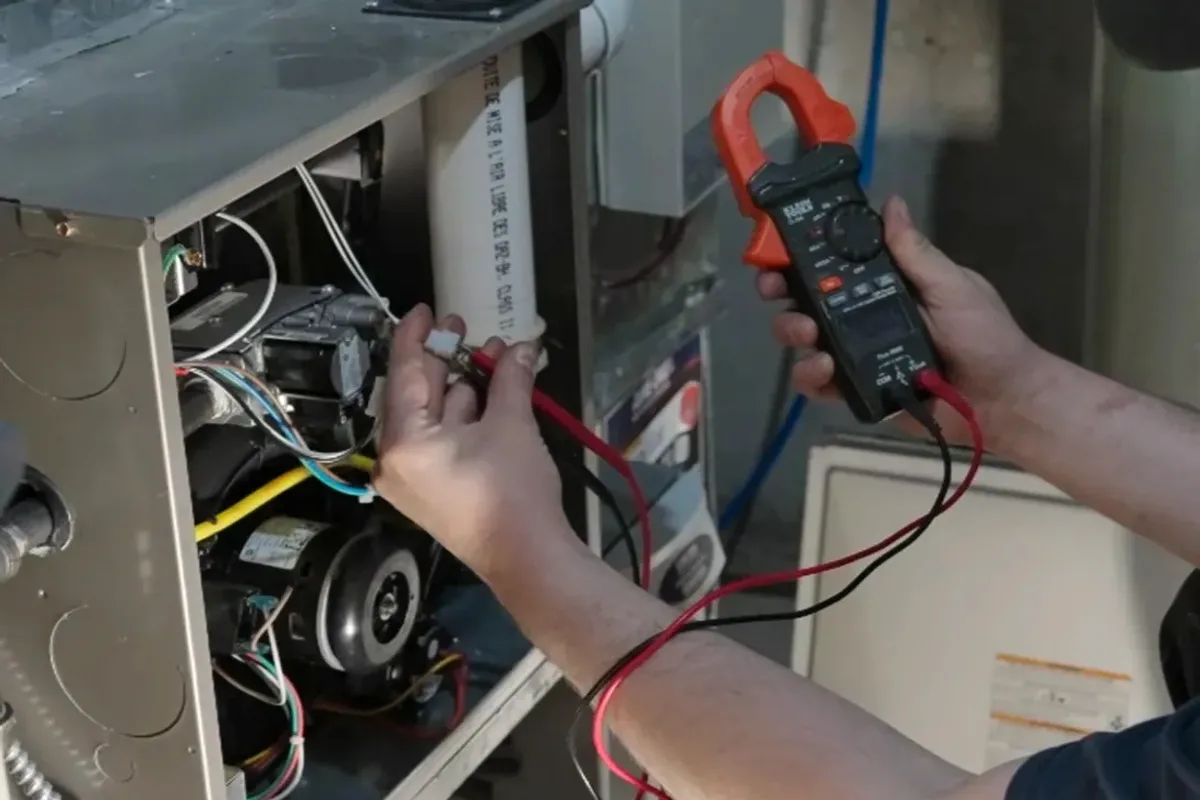
Compare repair, maintenance and replacement for an existing furnace in Kitchener. Use the confirmed fault, equipment condition and work included in each proposal to frame the decision.
What symptoms and recent changes should be recorded before arranging furnace diagnosis?
A furnace that will not start, produces uneven heat, or makes an unfamiliar sound needs diagnosis before a part is replaced. The cause may involve a control or burner, a thermostat call, restricted airflow, a blower, or a condensate drain on an applicable system. Observations about when the fault occurs and whether airflow has changed help distinguish these possibilities. Repair and replacement are separate decisions: recurring faults, equipment condition, and parts availability all matter when weighing them.
Note whether the furnace starts, stops during a cycle, or runs without warming the rooms, and record any unusual sound or display message. A technician can compare those details with control and airflow checks. Filter condition, blower operation, condensate drainage where applicable, and duct static pressure help show whether the fault is a component problem or an airflow restriction.
No-start, burner, ignition, and thermostat-call diagnosis
Filter, blower, condensate-drain, and duct static-pressure checks
Repair-versus-replacement decisions for recurring faults
Assessment and Scope
Questions for the Proposed Work
01
Separate a no-start fault from an airflow problem
A furnace that does not start may have a fault in its thermostat call, ignition sequence, burner, or safety controls; the exact checks depend on the model and fuel. If it starts but rooms receive weak or uneven airflow, filter condition, blower operation, and duct restrictions become more relevant. Record when the symptom begins and which rooms are affected. These observations help focus diagnosis without treating different faults as interchangeable.
02
Use airflow findings to guide repair
A restricted filter, dirty blower wheel, blocked condensate drain on a condensing furnace, or excessive duct static pressure can limit airflow and contribute to poor heating. Inspection findings determine which condition applies; replacing a part without checking airflow may leave the underlying issue unresolved. A repair assessment can compare measured static pressure and blower operation with the equipment requirements, then identify whether a component repair or duct correction is appropriate.
03
Compare repair with replacement on evidence
One failure does not by itself establish that a furnace should be replaced. Consider the diagnosed fault, the condition of the heat-producing and control components, the availability of suitable parts, and any pattern of repeated breakdowns. A repair may address an isolated, serviceable fault, while multiple recurring problems can justify comparing replacement options. The assessment should explain the findings and the distinct work involved in each choice.
Compare the next step
Ask both bidders to refer to the same fault findings and intended outcome. Separate necessary repair, optional maintenance, and replacement design in the comparison. Check who supplies parts, what labour and follow-up are covered, and whether changes to controls, airflow, or venting are included in either price.
Leave burner, fuel, venting, electrical, and internal equipment work to a qualified contractor. Do not bypass a safety switch or repeatedly reset a furnace.